


Chameleon Escape: Hide & Seek
Flynt Games
I spent time with Chameleon Escape: Hide & Seek as a light role-playing game built around one simple idea: stay hidden, use your surroundings, and avoid being caught. That premise is easy to understand, but it creates a surprisingly different mood from the usual combat-focused mobile RPG. Instead of asking me to defeat enemies through long battles, it asks me to pay attention, choose my moment, and think about how visible I am.
The game is free to install, which makes the first decision straightforward. There is no purchase price standing between a curious player and the basic experience. That matters here because the appeal depends heavily on whether you enjoy the hide-and-seek loop itself. I can try it without committing money, then decide whether the style suits me. For a short, casual session, that free access gives it an immediate advantage over paid role-playing games that demand a decision before I know whether their central mechanic will hold my attention.
Flynt Games presents the title as an Everyone-rated game, so it is positioned for a broad audience rather than a narrowly mature one. It belongs to the role-playing category, although its identity is much more focused on stealthy escape and playful evasion than on character statistics or lengthy storytelling. I would describe it as a compact, approachable game for people who like the tension of being pursued but do not necessarily want complicated controls or an elaborate fantasy campaign.
How the hide-and-seek idea works in practice
A simple premise with room for careful decisions
The strongest part of the design is the contrast between being seen and blending into the environment. A chameleon theme naturally supports that contrast: the character is not powerful because it can overpower everyone, but because it can avoid drawing attention. That changes how I approach each attempt. I am not simply moving toward a finish line. I am reading the space, considering the seeker’s position, and deciding whether speed or patience is safer.
This gives the game a different rhythm from many mobile role-playing releases. In a typical action RPG, progress often comes from upgrading attacks, collecting equipment, or repeating fights until the character becomes stronger. Here, the useful skill is awareness. A player who rushes may create a problem that a slower player would have avoided. That makes each short session feel more like a small puzzle than a conventional battle sequence.
Related News






The title is also easy to explain to someone who has never played it. I could hand the phone to a friend and describe the goal in a sentence: hide effectively, escape the seeker, and avoid being noticed. That clarity is valuable on mobile, where people often play between other tasks. There is little need to study a large rulebook before trying the central challenge.
Why the visual theme matters to the experience
The chameleon concept is not just a decorative label. It gives the game a clear personality and helps the hiding mechanic make sense immediately. When I think about the next move, I naturally look for the relationship between the character and the surrounding area instead of treating the screen as an ordinary path from left to right.
That theme also makes the game more approachable for younger players. The Everyone rating supports that broad positioning, while the hide-and-seek structure resembles a familiar playground idea translated into a digital format. Parents looking for something less aggressive than a combat-heavy role-playing game may find the concept easier to introduce, although I would still recommend that they try it themselves before deciding whether it fits a particular child’s preferences.
Gallery
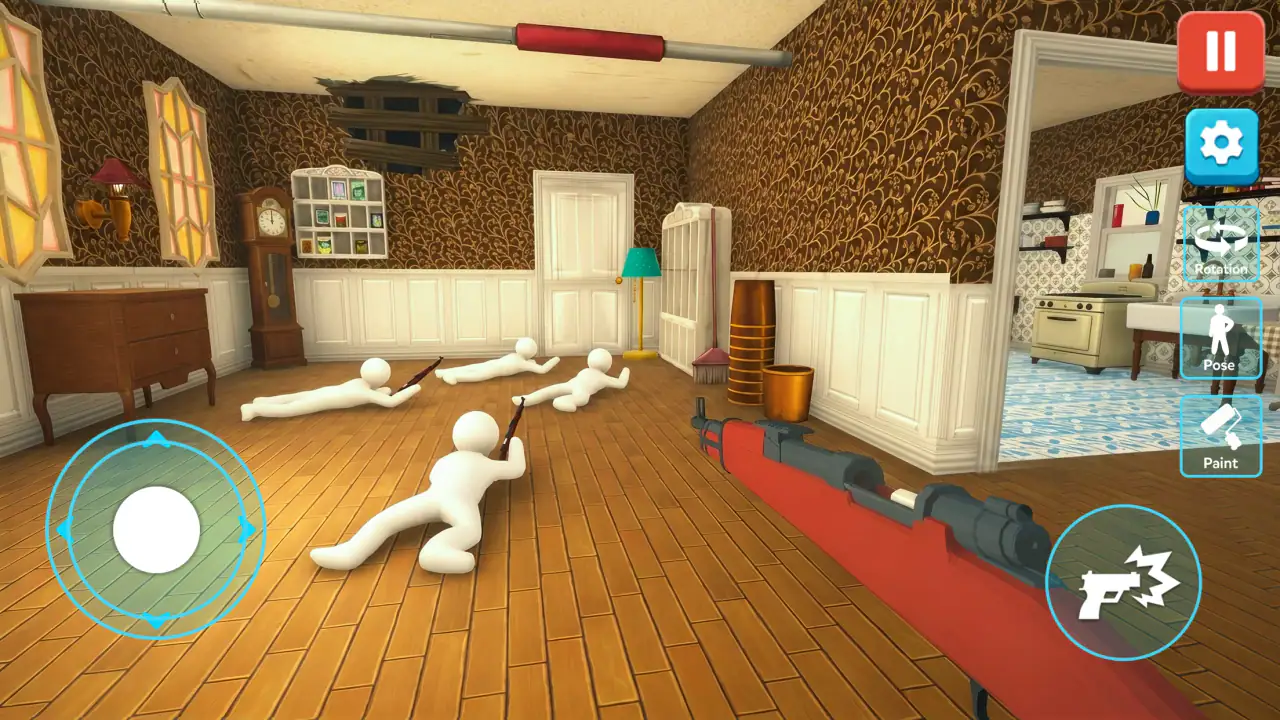
For adults, the same simplicity can be relaxing. I do not always want to manage a large inventory or remember a complicated set of abilities after a busy day. A focused game about hiding and escaping can work well when I want a quick mental break rather than a long commitment.
What I pay attention to while playing
The most useful habit is to stop treating movement as the only important action. Before I commit to a route, I consider whether the seeker is likely to pass through that area and whether moving now would make me easier to notice. This sounds obvious, but it is the difference between playing reactively and making a deliberate escape plan.
I also find that short pauses can be more valuable than constant movement. A player who keeps moving may feel active, yet activity is not the same as progress in a hiding game. Waiting for a safer opening can preserve an attempt that would otherwise end through impatience. That is one of the less obvious lessons the game encourages: sometimes the best move is temporarily doing less.
Another practical tip is to use the edges of the play area thoughtfully rather than automatically. A boundary can feel safe because it limits the directions from which danger can arrive, but it can also reduce escape options if the seeker approaches from the wrong side. I try to think of a hiding place as useful only when it offers both concealment and a possible next move.
Value from a free game
Because the game is free, its value begins with accessibility rather than a promise of premium depth. I can test the core idea without paying, and that is especially helpful for a title whose enjoyment depends on whether I like stealthy pursuit more than traditional RPG combat. The absence of an entry price makes experimentation easy: install it, play several sessions, and judge the loop on its own terms.
Free access does not automatically make every game good value, of course. The real question is whether the central activity remains enjoyable after the novelty of the chameleon theme wears off. In my view, the game earns its place as a casual option when I want a clear objective and a little tension without learning a large system. It is less convincing for someone expecting the breadth normally associated with a full role-playing adventure.
The public response suggests that the game has attracted a meaningful early audience, with an average rating of 4.3 from around 1.2 thousand ratings and more than 100 thousand installs. I treat those figures as a useful sign of interest, not as a substitute for personal experience. They indicate that the concept is reaching players, while the relatively small review count means I would still make my own judgement rather than assuming the rating explains every strength and weakness.
Where the value is strongest
I see the best value in short sessions. If I have a few minutes before an appointment, I can pick it up and focus on one immediate challenge instead of remembering a complicated story or rebuilding a strategy from an earlier point. That makes it a good companion for casual play, especially for people who enjoy games with a clear beginning, middle, and escape objective.
It can also work as a change of pace for players who normally choose action games. The tension comes from avoiding attention, not from dealing the most damage. That distinction gives the game a useful place in a crowded mobile category. It is not trying to replace a large role-playing adventure; it offers a smaller, more focused kind of decision-making.
Another source of value is its social readability. Even when I am playing alone, someone nearby can understand what is happening by watching for a moment. The idea of hiding from a seeker is instantly recognizable, so it is easy to share the experience informally with a friend or younger family member. That does not make it a multiplayer game, but it does make the action easy to follow and discuss.
Trade-offs compared with familiar alternatives
Compared with a standard role-playing game, this title gives up breadth in exchange for immediacy. Traditional RPGs usually offer character development, equipment choices, combat systems, quests, or a larger world to explore. A hide-and-seek game does not need all of those elements to be enjoyable, but a player who wants a deep progression journey may find the experience too narrow.
Compared with a pure puzzle game, the challenge feels more active and reactive. I am not only solving a fixed arrangement; I am responding to pursuit and adjusting my timing. That can make the game more exciting, but it can also make outcomes feel less comfortable for someone who prefers complete control and unlimited time to plan.
Compared with competitive action games, it is likely to feel calmer and more accessible, but also less intense for players who want fast combat or constant pressure. The chameleon theme gives it a distinctive hook, yet the same focused hook may become repetitive if hiding and escaping are not enough to hold a player’s attention over many sessions.
The version I reviewed is 1.1, and that is worth keeping in mind when judging the game’s maturity. It is an early version rather than a long-established role-playing platform with years of accumulated systems. I would approach it as a focused casual release and leave room for my opinion to change as the game develops, rather than expecting the content range of a much older genre leader.
Small habits that improve the experience
My first recommendation is to learn the environment before trying to move quickly. On an initial attempt, I focus less on winning and more on noticing where the seeker can approach and which areas leave me with a second option. That turns the first session into useful preparation instead of a frustrating failure.
Second, I avoid making every decision based on the shortest visible route. The shortest route is attractive because it seems efficient, but in a pursuit game it may expose me at exactly the wrong time. A slightly slower path can be better if it gives me more room to react. This is a practical trade-off that is easy to miss when the goal appears to be simple escape.
Third, I try to separate a mistake caused by poor timing from one caused by poor positioning. If I move while the seeker is too close, the problem is timing. If I choose a hiding place with no follow-up route, the problem is positioning. Thinking about failures this way helps me improve instead of repeating the same action and hoping for a different result.
Finally, I would play with a light mindset. The game is most enjoyable when I treat each attempt as a quick experiment in concealment rather than as a serious test of long-term character power. That attitude suits its free, casual nature and prevents me from expecting systems it was not designed to provide.
Who should give it a try
This is a good fit for players who enjoy stealth, pursuit, and simple environmental decisions. I would recommend it to someone who likes the idea of being clever rather than overwhelmingly strong, especially if they want a role-playing game that can be understood quickly. It also suits younger or family audiences looking for an Everyone-rated option with a playful central theme.
It is useful for casual players who do not want to spend a long time learning controls before reaching the interesting part. The free price makes the trial painless, so people who are unsure about the genre have little reason not to test the basic loop. If you enjoy watching for patterns, waiting for openings, and escaping at the right moment, the game has a clear chance of becoming a pleasant pick-up-and-play option.
I would be more cautious about recommending it to someone who wants a substantial story, complex character builds, deep combat, or a large amount of long-term progression. A player who measures RPG value mainly through equipment, abilities, and world-building may find the hide-and-seek focus too limited. In that case, a conventional role-playing game would probably be a better use of time, even if it requires more learning or a purchase.
My verdict on downloading it
My recommendation is to try it if you want a free, approachable game with a clear stealth-and-escape identity. The chameleon theme gives the experience personality, while the pursuit structure creates decisions that are more thoughtful than the simple premise first suggests. I particularly like the way it rewards patience, route awareness, and the willingness to wait instead of constantly moving.
The trade-off is focus. This is not the game I would choose when I want a sprawling RPG adventure or a powerful progression system. Its value comes from delivering a compact hide-and-seek challenge, not from matching the scale of a traditional role-playing epic. Players should approach it with that expectation and judge whether the central loop remains enjoyable after the first few attempts.
For me, the free entry point makes that decision easy. The game is approachable, broadly rated, and distinctive enough to stand apart from ordinary combat-led mobile RPGs. I would keep it installed for short sessions and recommend it to friends who enjoy playful stealth more than grinding for stronger equipment. If that is not the kind of tension you want, skipping it is reasonable; if it is, Chameleon Escape: Hide & Seek offers a simple idea with enough tactical nuance to justify a try.
FAQs for Chameleon Escape: Hide & Seek
What is Chameleon Escape: Hide & Seek?
Chameleon Escape: Hide & Seek is a casual stealth game built around the classic hide-and-seek idea. You control a chameleon that must blend into the environment, avoid being discovered, and reach safety or complete the level objective. The game combines simple controls, colorful stages, and short challenges, making it suitable for quick sessions on Android or iOS.
How do you play Chameleon Escape: Hide & Seek?
Gameplay is mainly focused on timing, movement, and camouflage. You guide the chameleon through each stage while watching for seekers, obstacles, and dangerous areas. Depending on the level, you may need to hide among matching objects, move when the path is clear, and escape before you are spotted. The controls are designed to be easy for new players to understand.
Is Chameleon Escape: Hide & Seek free to download?
The game can generally be downloaded without an upfront purchase, although availability and pricing may differ between the Google Play Store and Apple App Store. Like many free casual games, it may include optional advertisements, in-app purchases, or both. Before installing, check the store listing for the current monetization details, supported devices, and any age-related information.
Can Chameleon Escape: Hide & Seek be played offline?
Some parts of Chameleon Escape: Hide & Seek may work without a continuous internet connection, which is convenient for short trips or areas with limited service. However, advertisements, rewards, account features, updates, and certain online functions may require internet access. For the most reliable experience, launch the game once while connected and review its behavior in offline mode.
Is Chameleon Escape: Hide & Seek suitable for children?
Chameleon Escape: Hide & Seek uses a playful hide-and-seek theme rather than realistic violence, so it may appeal to children and families. Nevertheless, parents should review the age rating and privacy information on the relevant app store. If the game displays advertisements or offers purchases, parental controls are recommended to prevent accidental interactions or downloads.
Pros
- Simple controls make it easy to start playing immediately.
- Short rounds are convenient for quick gaming sessions.
- Bright visuals and playful animations suit casual players.
- Hide-and-seek gameplay offers a fun change from standard runners.
- Progression encourages repeated play and improving your strategy.
Cons
- Gameplay can become repetitive after several rounds.
- Difficulty may feel uneven across some levels.
- Ads may interrupt the experience between sessions.
- Limited depth may disappoint players seeking a long-term challenge.
- Performance can vary on older or less powerful devices.


